
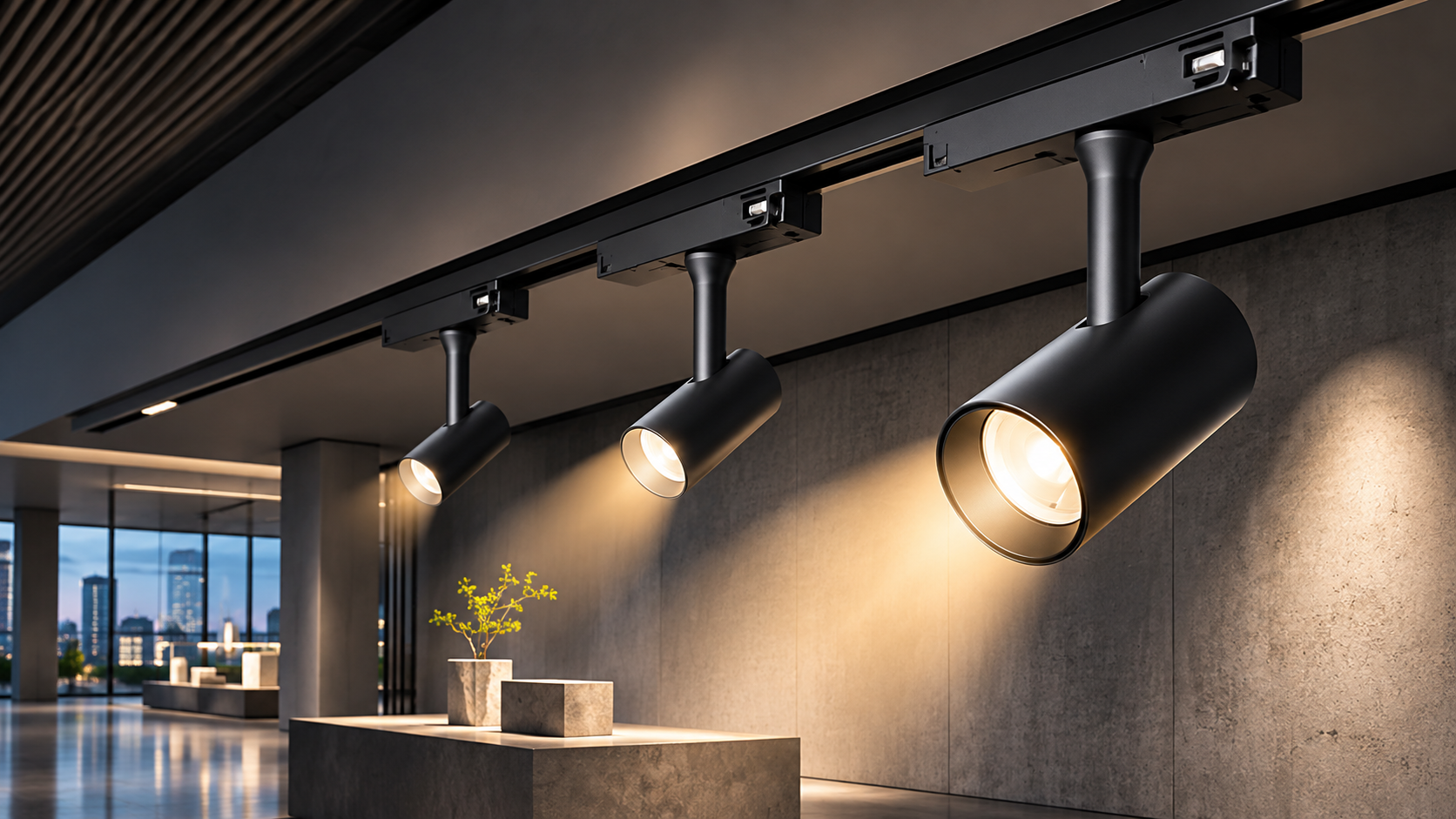
THE SHORT VERSION
Choose the system, the light and the layout together. A fitting that looks right still needs to work with your track, controls and space.
01 / THE FOUNDATION
What is track lighting?
Track lighting places individual light fittings along a shared powered track. Instead of fixing every light in one permanent position, a compatible system lets you position and aim fittings around the objects or areas you want to illuminate.
That flexibility makes it useful for retail displays, showrooms and galleries, where the focus of a room can change. A complete system includes more than the spotlight: the track, adapters, connectors, power arrangement and controls all need to work together.
02 / KNOW YOUR OPTIONS
Two systems. Different starting points.
Conventional and magnetic track lighting offer different ways to connect and arrange light fittings. Choose around your project requirements and verified compatibility.
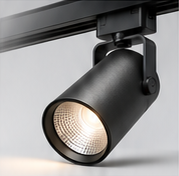
Conventional track lighting
Adjustable luminaires connect to a powered track. It is a practical starting point for displays that change over time.
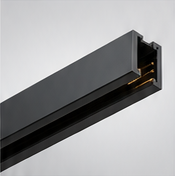
Magnetic track lighting
Compatible modules attach magnetically to a matching track, allowing different lighting formats within a coordinated system.
Product images are concept illustrations. Confirm actual specifications in the quotation.
A matching appearance or a similar system name does not guarantee that two products will connect safely. Verify the complete track and adapter combination.
03 / READ THE LIGHT
Look beyond the wattage.
Watts describe electrical power consumption. To understand the light in your space, discuss these four qualities as well.
Beam angle
A narrow beam concentrates light on a smaller area; a wider beam covers more. Mounting distance also changes the size and intensity of the light on your display.
Color temperature
Measured in kelvin (K), this describes whether white light appears warmer or cooler. Compare samples against your actual merchandise and interior finishes.
Color rendering
The color rendering index (CRI) is one indicator of how a light source renders object colors. Review the available color data and samples when appearance is important.
Glare & visual comfort
A bright fitting in a visitor’s direct line of sight can be uncomfortable. Consider the optical design, shielding, aiming and viewing positions together.
Concept diagram only. Actual coverage depends on the luminaire and mounting distance.
04 / PUT IT INTO CONTEXT
Start with what people should see.
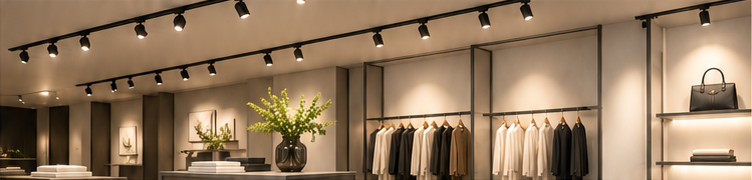
Retail stores
Identify featured merchandise first. Balance accent lighting with comfortable light along walkways, and check how the products look from a customer’s position.
Showrooms
Use light to reveal shape, texture and finish. Test aiming on the actual display, especially where polished or reflective surfaces can send glare toward visitors.
Galleries
Plan around artwork positions, viewing angles and reflections. Confirm any conservation limits with the curator before selecting light levels and operating hours.
05 / A BETTER PROJECT BRIEF
Before you order, check these six things.
A few details at the beginning can prevent an unsuitable product combination later.
- Your spaceApplication, floor plan, ceiling height and display positions.
- Your trackExact system, installation method, adapter and connector details.
- Your powerElectrical ratings and, where required, a compatible power supply.
- Your lightOutput, beam angle, color appearance and color-rendering requirements.
- Your controlsOn/off or dimming, with a verified luminaire and controller combination.
- Your orderQuantity, delivery country, sample approval and required documentation.
Installation and electrical alterations should be carried out by a qualified electrician in accordance with the product instructions and local requirements.
06 / COMMON QUESTIONS
A little more clarity.
Will every track light fit every track?
No. Similar-looking tracks can use different mechanical profiles, electrical arrangements and adapters. Confirm the exact manufacturer and system details before ordering. A photograph is a useful starting point, but it does not replace a compatibility check.
Can I dim a track light?
Only when the luminaire, its driver and the control method are compatible. Ask for the supported dimming method and test a sample with the intended controller before placing a project order.
How many lights does my shop need?
There is no reliable fixed number per square meter. Ceiling height, beam angle, surface finishes, display positions and the light already in the room all affect the result. Share a floor plan and lighting targets for a project-specific assessment.
Can I install or move the lights myself?
Use a qualified electrician for installation and electrical alterations. Follow the system instructions, switch off and isolate the supply before any permitted adjustment, and never assume a magnetic system can be handled while powered.
What information should I send for a quotation?
Send your application, quantities, delivery country, ceiling height, floor plan and any existing track details. Include your preferred light appearance and dimming requirements if known.
Prepared by UP-ENERGY as a general introduction. It is not a product specification or a site-specific lighting design. Confirm final performance, compatibility and availability for your project.